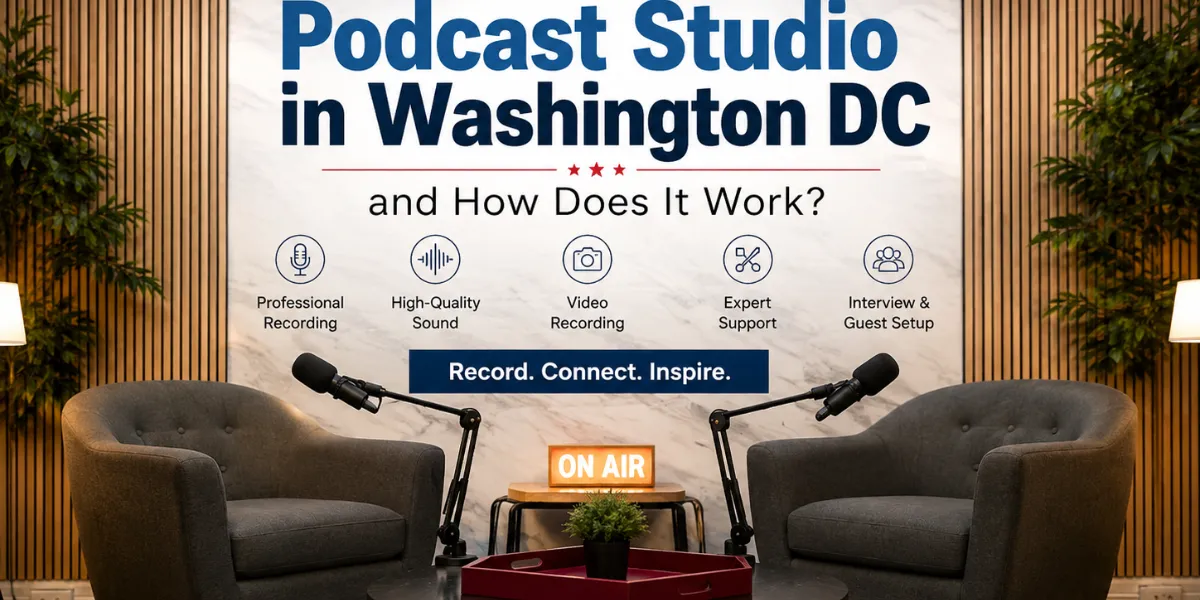
What Is a Podcast Studio in Washington DC and How Does It Work?
You recorded a few episodes on a laptop mic, listened back, and something felt off. Not the content. The sound. That's usually the moment people start looking at a podcast studio in Washington DC and wondering what they'd actually be paying for. A room? A microphone? Someone to press record? The honest answer is all three, plus a long list of decisions that get made before you ever sit down. Here's what one of these spaces really is, what happens during a session, and how the process runs from the first booking email to the finished file in your inbox.
What a Podcast Studio Actually Is
A podcast studio is a purpose-built space where the acoustics, the equipment, and the workflow have already been solved before you arrive. Most people assume the microphone is the important part. It matters. But the room matters more, and it's the part you can't fix later with software.

The room does most of the work
Sound bounces. In a bedroom, an office, or a spare conference room, your voice leaves your mouth, hits drywall and windows and hard flooring, then arrives back at the microphone a few milliseconds behind the original. That delay is what creates the hollow, boxy, slightly distant quality you hear on amateur shows. Your ears filter it out in the moment. Microphones don't.
Treated rooms handle this with absorption panels, bass traps, thick flooring, and non-parallel surfaces that stop sound from ping-ponging between two flat walls. The result is a signal that arrives clean the first time. It's the same acoustic thinking that makes a vocal booth work for music, which is why a lot of DC spaces run music sessions and podcast tapings out of the same treated rooms.
The gear you don't have to buy
The second thing you're renting is a signal chain that already works together. Broadcast dynamic microphones that reject room noise. A dedicated console or interface with clean preamps. Boom arms so nobody is bumping a desk. Individual headphone feeds so each person hears the mix. Cameras and lighting if you're shooting.
Buying that setup for four people is a real investment, and it depreciates. Booking a room that already has it means you're paying for access instead of ownership, which is why so many shows never build out a home rig at all. Studios that offer full podcast production services usually bundle the gear, the room, and the operator into one hourly rate.
What a standard multi-guest setup includes
Four cardioid broadcast microphones on adjustable boom arms
A multi-channel mixer or interface recording each mic to its own track
Individual headphone monitoring for host and guests
Two or three cameras for video capture
Studio lighting positioned for on-camera work
Backup recording running in parallel
How a Podcast Studio in Washington DC Works, Step by Step
Booking and pre-session planning
Most studios take bookings online with a date, a time block, and a service type. This is where you tell them how many people are coming, whether you need video, and roughly how long you'll record. That headcount matters more than people expect. Two people at a table is a different setup than five, and swapping mid-session eats into your paid time.
Setup and sound check
Plan to arrive fifteen minutes early. The engineer positions mics for each voice, sets gain levels so nobody clips when they get excited, and runs a quick test recording. If you're doing video, this is also when lighting gets adjusted and framing gets locked. Sound check takes ten minutes and saves you an hour of cleanup later.
The recording itself
You talk. The engineer watches levels, flags problems in real time, and marks timestamps for anything worth cutting. Multi-track recording means each microphone lands on a separate channel, so if one guest coughs while another is mid-sentence, the cough can be removed without touching the good audio. That single detail is the biggest technical advantage over recording everyone into one file.
What happens after you leave
Raw audio is not a finished episode. Editing removes dead air, false starts, and the worst of the verbal filler. Then comes the technical pass: level matching so the quiet guest and the loud guest sit at the same volume, EQ to clear up muddiness, compression for consistency, and loudness normalization so the episode meets platform standards. Studios that handle mixing and mastering in-house can take this straight through without you managing a separate freelancer.
Who Runs the Session and Why That Matters
The engineer is the part of the equation people underestimate. A good one hears a problem before it becomes a problem: a chair squeak, a mic drifting off-axis, a guest who leans back every time they laugh. They fix it while you keep talking, and you never know it happened.
They also know their room. Every studio has quirks, and someone who has recorded a thousand hours in a space knows exactly where each voice type sounds best. Before you book, it's worth looking at who's actually behind the board rather than only comparing hourly rates. The gear list on a website tells you less than the credits of the person operating it.
What It Costs and What You Walk Away With
Rates in the DC area typically run hourly, with the range depending on whether you need video, how many people are recording, and how much post-production is included. Some studios quote a raw recording rate and bill editing separately. Others bundle it. Neither is wrong, but you need to know which one you're getting before you compare two numbers.
At the end of a session at a full-service space like HighLife Studios, you should expect to receive your raw multi-track files, a mixed and mastered audio episode, and, if you shot video, an edited cut plus vertical clips for social. If a studio can't tell you exactly what lands in your folder, ask.
Home Setup vs. Studio: The Honest Comparison
A home setup wins on cost and flexibility. Record at midnight, record in pajamas, record twelve times a week. If your show is a solo audio format with a small audience, that's often the right call, at least at first.
A studio wins on three things: consistency, guest experience, and time. Every episode sounds the same, which builds trust with listeners more than most hosts realize. Guests take you more seriously when they walk into a real room. And you stop spending your Sunday cleaning up audio.
The tipping point usually arrives when you start booking guests you'd be embarrassed to record badly, or when video enters the picture. Video podcast production is genuinely hard to fake at home, and it's where the gap between a treated room and a spare bedroom shows up immediately.
Start where you are. Record a few episodes, figure out whether the format sticks, then book a session and hear the difference for yourself. Most people only need one side-by-side comparison to know which direction they're going.
