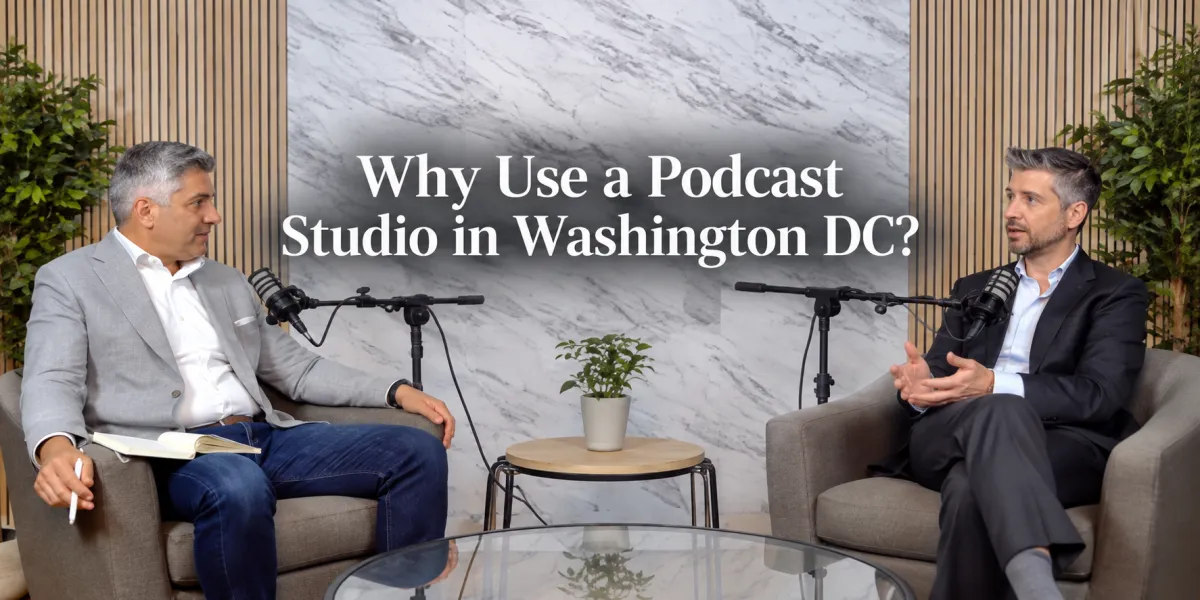
Why Use a Podcast Studio in Washington DC?
If you've searched for a podcast studio in Washington DC, you already know the DMV has plenty of options, but not all of them are built the same way. Some are converted closets with a couple of USB mics plugged into a laptop. Others are real production spaces with engineers on staff, multiple camera angles, and gear that costs more than most people's cars. The difference shows up the moment a listener hits play, in how clean the audio sounds and how sharp the video looks if you're recording that too. It also shows up in how guests react when they walk into the room, since a real setup tends to make people take the invitation more seriously. This guide walks through what a proper studio actually gives you, when it's worth paying for one, and what to ask before you book a session.
What a Podcast Studio in Washington DC Should Actually Offer You
A studio is more than a quiet room. It's the equipment, the acoustics, and the person running the session, all working together so you can just show up and talk.
Broadcast-Quality Gear, Not Guesswork
Anyone can buy a microphone. Getting it to sound right in a specific room is a different problem entirely. A recording studio built for podcasting comes with dynamic broadcast mics matched to the space, multiple camera angles already framed and lit, and an engineer who knows how to ride audio levels in real time instead of trying to fix everything afterward. That last part matters more than most people expect going in. Bad audio is genuinely hard to repair after the fact, even with good editing software, and viewers tend to forgive a rough camera angle far more easily than they forgive audio that's hard to listen to.
Acoustic Treatment You Can't Fake at Home
Search for any podcast recording studio in DC and you'll find a wide range of setups, from bare walls and borrowed furniture to fully treated rooms built for sound. A carpeted bedroom still has hard walls, a hollow door, and a window that lets in traffic noise from outside. Acoustic panels and bass traps aren't decoration. They're the reason a studio recording sounds warm and close instead of hollow and thin, and it's the one thing a nice microphone alone can never fix on its own.
Audio-Only or Full Video: Picking the Right Setup
Not every show needs cameras rolling. Plenty of successful podcasts are audio-only, and recording that way is simpler and usually cheaper per session. But if you're building a presence on YouTube or want short clips for Instagram and TikTok, video changes what you actually need from a studio. Now you're thinking about lighting, camera angles, and someone who knows how to cut between multiple feeds into something worth posting.
A solid podcast production setup should offer both formats without forcing you to use a completely different vendor for each one. Multi-camera setups with two or three angles let an editor cut between speakers the way a real show does, which tends to hold viewers longer than a single static shot ever will. If you're not sure which format fits your show yet, a good studio should walk you through the tradeoffs instead of upselling you on cameras you don't need yet.
On-Location Recording Across the DMV
Studio walls aren't always the point. Interviews at a conference, a live taping in front of an audience, or a founder who wants footage of their actual workspace all call for recording somewhere other than a booth. On-location podcast recording has become common enough that DC crews have set up at convention centers, on local university campuses, at live music venues, and even outdoors on the National Mall.
What to Plan For Before You Book On-Location
On-location sessions take more coordination than walking into a studio. Crews need advance notice to confirm gear, staffing, and access to the venue, so this isn't something to book the week of your event. Ask early how many camera operators and audio techs will actually be on-site, since a single-camera on-location shoot looks very different from a three-camera setup with a dedicated sound engineer running audio.
How Far Crews Will Travel
Most on-location work stays within the DMV, but bigger productions have taken crews much farther. Past sessions have traveled to Los Angeles, Austin, and even Davos, Switzerland for clients who needed the same production quality somewhere else entirely. If your event is out of state, it's worth asking directly whether travel is an option instead of assuming it isn't.
Is Booking a Studio Worth It for a New Show?
Not every podcast needs a full studio from episode one. If you're still testing an idea, a laptop and a decent USB mic might genuinely be enough to figure out whether you like hosting a show at all, and there's no reason to spend real money before you know that.
Where it starts to matter is the moment you're publishing on a regular schedule and asking people to actually listen. At that point, the gap between a home recording and something made at an actual podcast recording studio in DC becomes pretty obvious, both in how it sounds and in how seriously guests take the invitation to be on your show. Better production value tends to make booking better guests easier too.
Why DC Creators Keep Coming Back to the Same Studio
HighLife Studios has worked with more than 1,000 creators across the DMV, and that kind of repeat business usually comes down to two things: the work sounds and looks good, and turnaround doesn't drag on for weeks. Raw files typically go out the same day a session wraps, with fully edited episodes ready in about five to seven business days depending on how much post-production the episode needs, including in-house mixing and mastering.
None of that happens by accident. It takes engineers who record podcasts every week, not occasionally, and who've already solved the lighting and acoustic problems most home setups run into for the first time on air. If you're curious how a small idea turned into one of the DMV's busiest studios, the story behind how it all started is worth a read before you book.
A great episode starts with clean audio and a room that isn't fighting you the whole time. If you're weighing a podcast studio in Washington DC against just recording at your desk, book a short session and hear the difference for yourself before committing to a full season. Reach out with your dates and format, and someone can walk you through what a session actually looks like.
